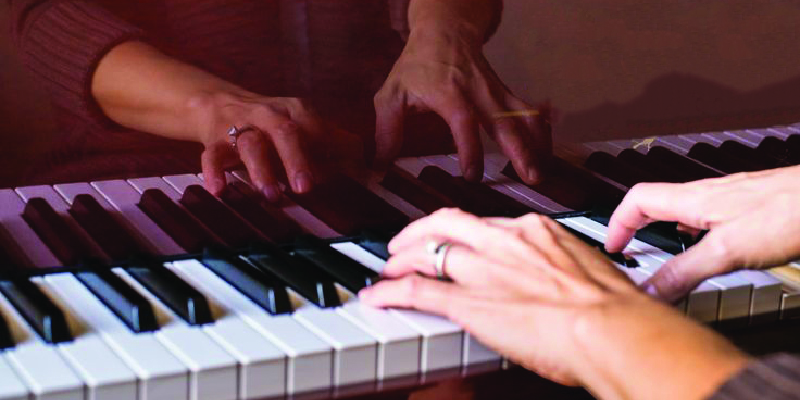
“Music is not just something you do; it’s a way to understand the world. When a child learns to play a piece with feeling, they are learning to listen, to express themselves, and to be brave.”
When most parents call me to ask about lessons, they usually talk about the music. They want their child to learn to read notes, play scales, or maybe just play a specific composition they like. While those technical skills are obviously the main part of what we do, they are really just the beginning. In my years of teaching, I have seen that the real value of sitting on the piano bench goes far beyond the music itself. It is about life skills, the quiet confidence, and the emotional growth that happens along the way. This blog is a look at the hidden benefits of learning the piano and why it is so much more than just hitting the right keys in the right order.
So, What Life Skills Do Children Learn from Piano?
Playing the piano is one of the best ways for a child to learn focus and discipline, often without them even realizing they are doing it. To learn a new composition, a student has to sit still, play close attention to small details on the page, and work through a problem step by step. In a world where children are used to getting things instantly on a screen, the piano teaches them to slow down. This ability to focus on a single difficult task for a period of time is a skill that will help them in their schoolwork and in everything else they do as they grow up.
Another massive life skill they learn in my studio is how to handle failure and keep going. In every single lesson, a student will make mistakes. They will play a wrong note, mess up a rhythm, or forget a part of the music. And then, they have to stop, take a breath, and try again until they get it right. This teaches them resilience and “grit.” As one of the experienced Bristol piano teachers for beginners, I see children learn that making a mistake is not the end of the world; it is just a necessary part of learning how to succeed.
You Must Think “Why Should Music Lessons be Playful and Fun?”
I believe that if a child is not having fun, they are not really learning to their full potential. Music should be a joy, not a chore that they have to get through just to make their parents happy.
It Keeps Their Brains Open
When lessons are playful, a child’s brain is more open and ready to absorb new information. In my studio, we use games, challenges, and fun music to keep the energy high. We might play a game to learn note names or have a “fastest finger” challenge for scales. This keeps the learning active and stops it from feeling like a boring lecture at school.
It Builds a Lifelong Love
Keeping it playful is the secret to building a lifelong love for music. If a child associates the piano with stress, strict rules, or boredom, they will likely quit as soon as they are allowed to. But if they associate it with creativity, laughter, and fun, they will want to keep playing for themselves. This is the approach we take in our piano lessons for children and adults in Bristol.
It Helps Them Practice More
When a student enjoys the music they are playing, they are much more likely to sit down and practice at home without being told. I try to find pieces that my students actually like, whether it is a classic tune or something else. When they want to hear the music, the hard work of practicing feels much less like work.
But, How Does Music Help with Self-Expression?
For many children (and even many adults), it can be very hard to put big feelings into words. Music gives them a new language to express how they feel without having to speak.
A Safe Outlet for Emotions
When a student learns to play a piece with emotion, maybe playing it loudly and boldly when they are energetic, or softly and gently when they are quiet, helps them learn how to let their feelings out. It becomes a safe and creative place for them to be themselves. They learn that their feelings can be turned into something beautiful.
Learning to Keep Going
When a student learns a hard piece of music, they have to practice the same part many times. They learn that they cannot play it perfectly on the first try. This teaches them that they have to keep working at something to get it right, which is a lesson that helps them in other parts of their life.
Getting Used to an Audience
Playing the piano often means playing for other people, even if it is just for me in a lesson. This helps a student get used to being watched while they do something. Over time, this makes them feel more comfortable when they have to speak or perform in front of a group at school.
Lastly, Is It Too Late for Adults to Get These Benefits?
These are the questions I get asked the most, and the answer is absolutely not. Adults need these benefits just as much as children do, if not more. Taking beginner piano lessons for adults in Bristol is a wonderful way to reconnect with your own creativity and to do something just for yourself. In our busy adult lives, we rarely get the chance to be a beginner at something and to learn just for the joy of it. It is a great way to relieve stress after a long day of work.
For adults, the piano is proof that you can still learn something new. We often get stuck in a routine of work and home, and we forget what it feels like to be a beginner. Learning to read two different lines of music while your hands do two different things is a real workout for your brain. It shows you that you can still take on a challenge and win. There is a great feeling of satisfaction when you finally play a piece that looked impossible just a few weeks ago.
Summary
The piano is more than just an instrument; it is a teacher. It shows you how to work hard, how to be patient with your own mistakes, and how to say things without using words. These are lessons that stay with you forever, whether you are six years old or sixty. If you are looking for affordable adult piano lessons near me or a private piano teacher in Bristol for beginners, I’m here to help. You can contact me through this form to set up your first lesson.
 Sophia McKett